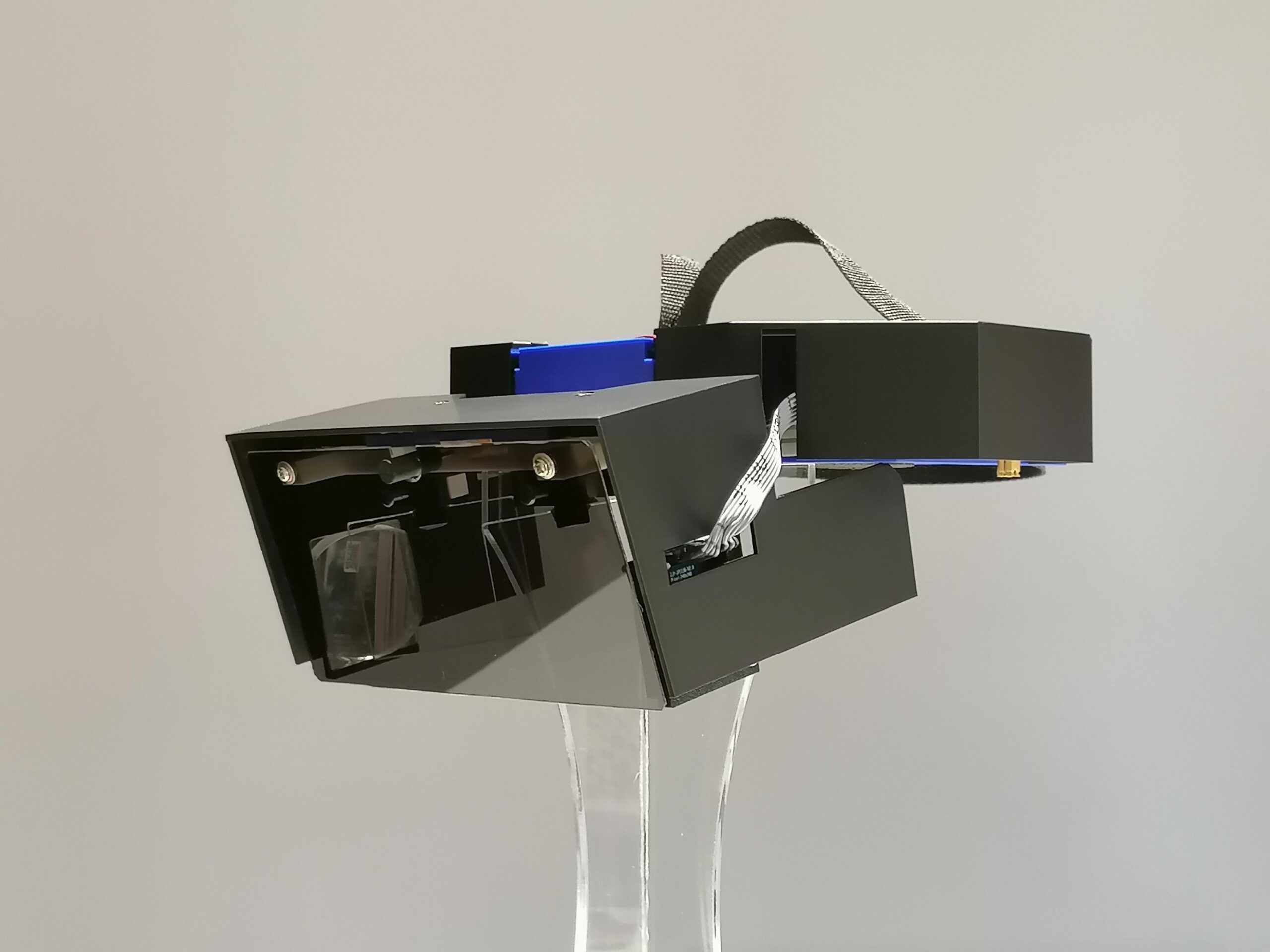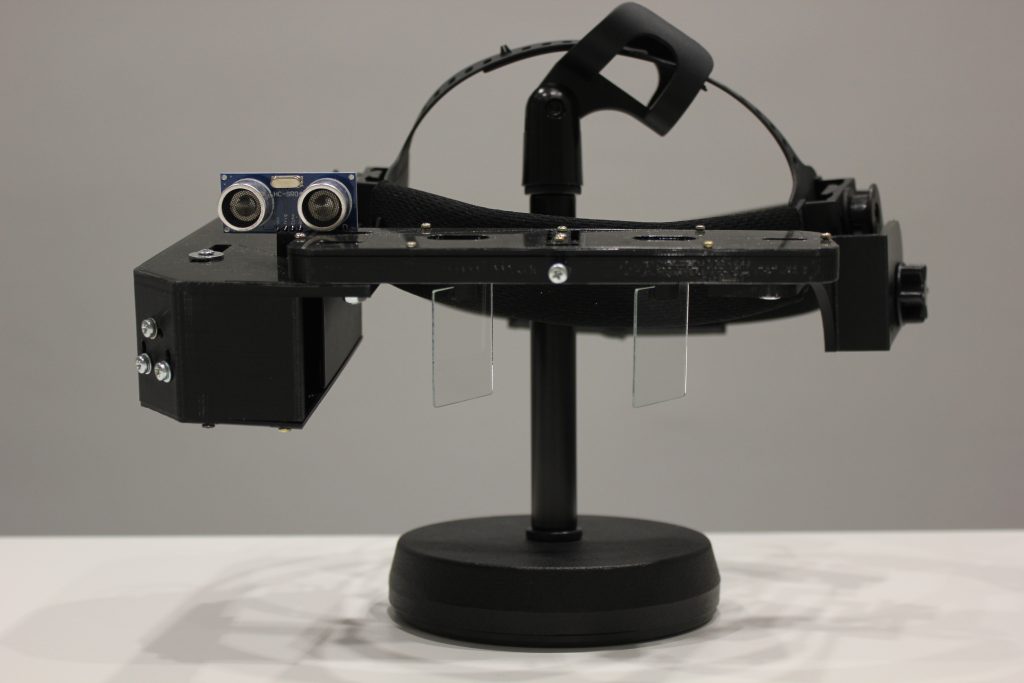
What is OpenAR?
OpenAR is an open access project hailing from the University of Eastern Finland, continuously progressed by a variable group of students and teachers. The foundation of the project is to make augmented reality headsets available to everyone and inspire enthusiasts to develop their own DIY AR devices. All the documentation, 3D models, and code are free to use and modify. The devices are designed around modular, replaceable components, using affordable and widely available materials—such as pocket mirrors and reading glasses!
Who is it for?
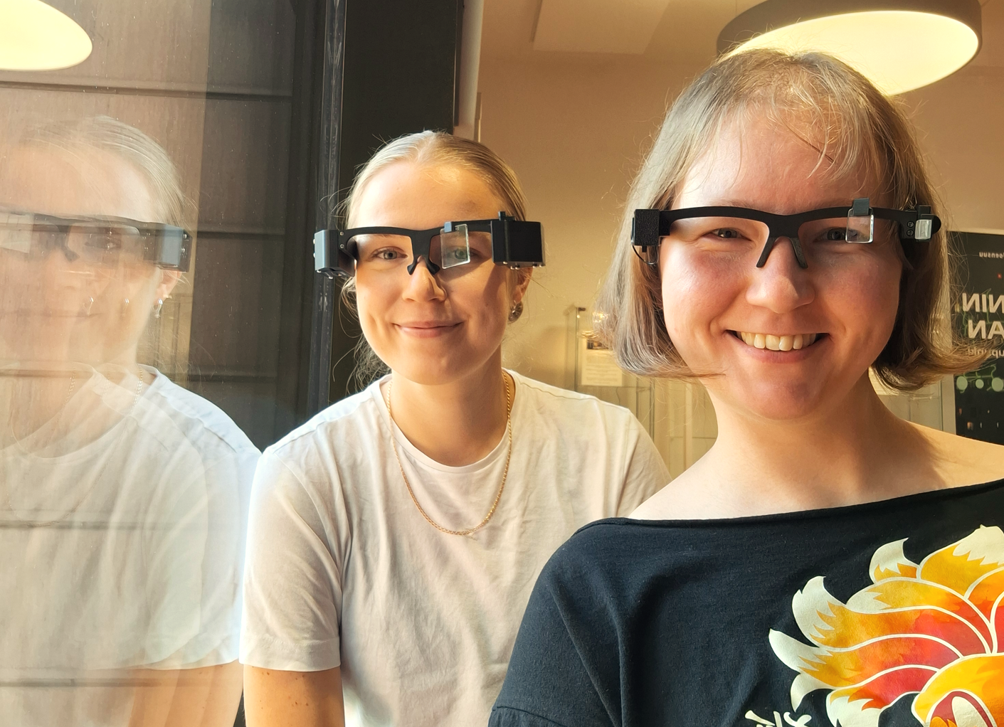
You! Tinkerers, electronics hobbyists, schools, companies interested in AR, augmented reality enthusiasts… the list goes on. Our latest iterations rock the most hobbyist-friendly parts imaginable. If you have ever soldered in your life (or if not, but watch a tutorial or two first), then you will be able to build our AR headset from start to finish.
And the best part is, the cost of the headset can be as low as 35 €! The total manufacturing cost varies between 35–130 € depending on the model with the bulk of the cost coming from electronics. The optical elements are cheap—commercial AR headsets use sophisticated waveguides and custom parts, while OpenAR demonstrates the underlying principles using inexpensive off-the-shelf components and making the optical system easy to understand and reproduce.
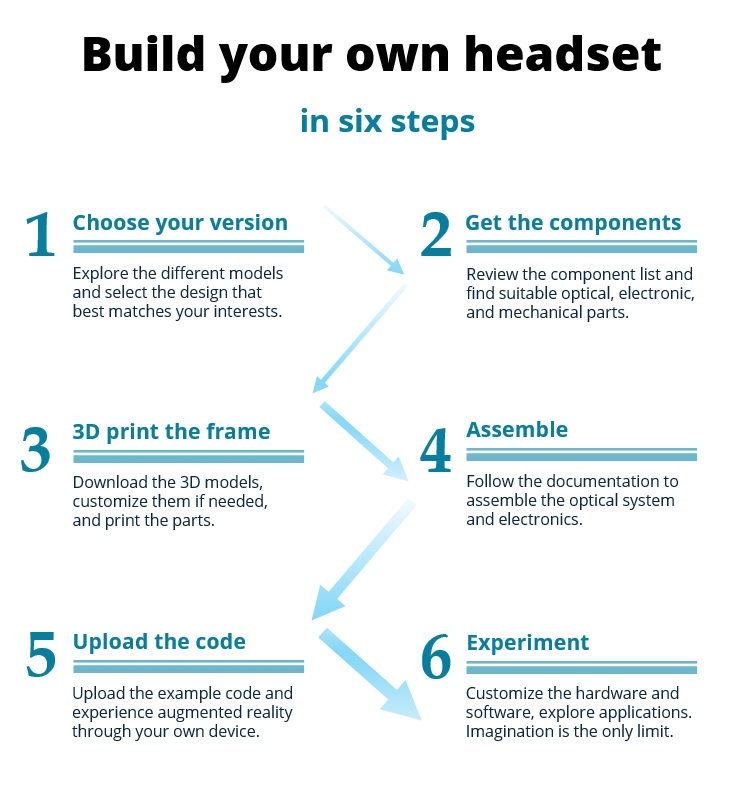
How do they work?
To date, all devices utilize one of two optical designs to form the image. The first design has all the optical components at the front of the head, while the second moves the display towards the temple. Both designs allow adding a second glass plate for stereo vision.
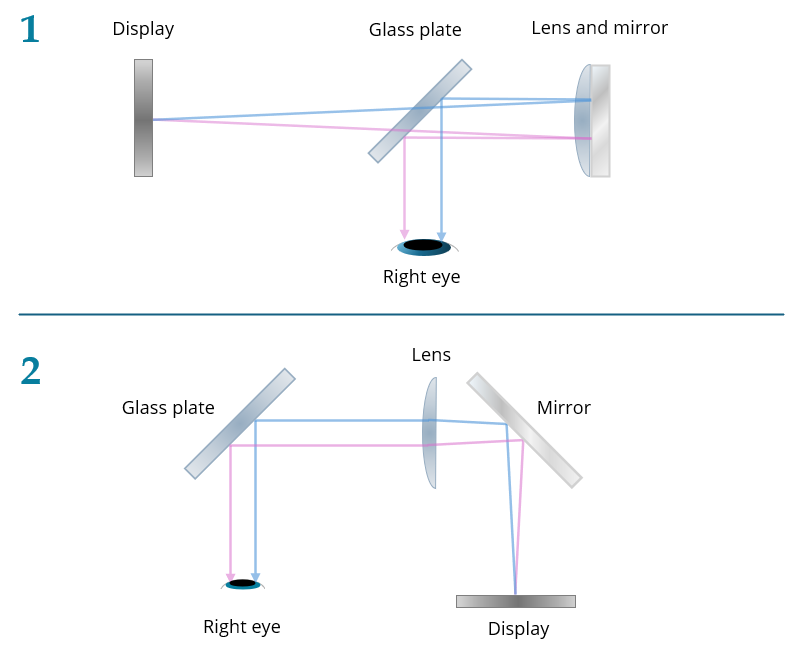
Because of the simplicity of the designs, expensive and specialized optics are not needed. The rest of the headset is a bit of electronics which dictates its functionality, and a 3D printed frame to hold the components together. That’s it!
Showcasing the OpenAR models
All OpenAR devices work on the principle of modularity and replaceability: with minor modifications, you can change the 3D-parts, the electronic components, the optics, and the software to your liking. From environmental sensors and thermal imaging to games and gesture-based communication, the OpenAR platform is designed to adapt to your needs.
OpenAR-S (upcoming)
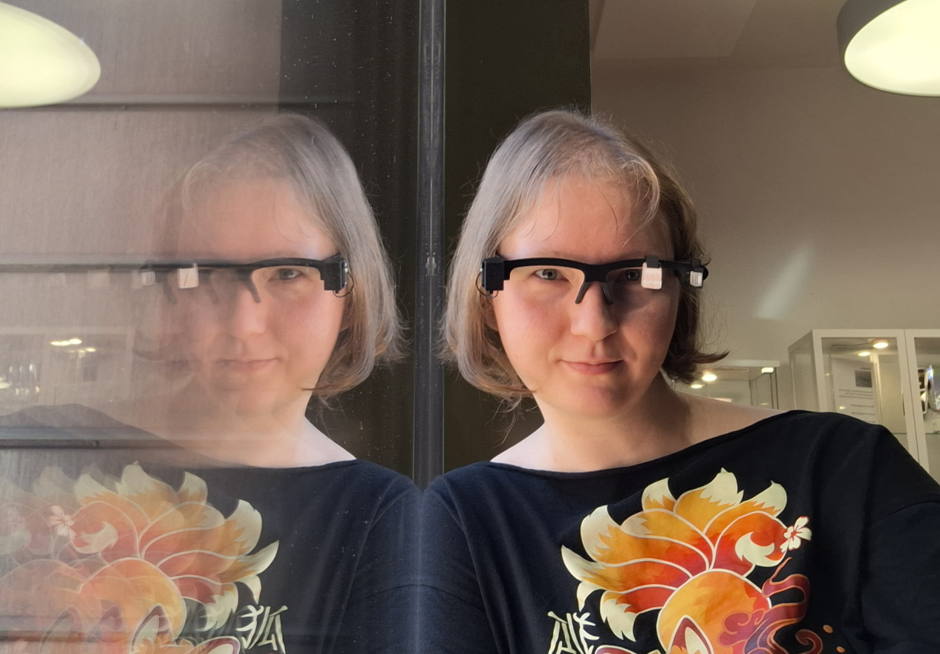
With components costing roughly 35 €, model S is the smallest and most accessible device in the OpenAR family. The tiny AR headset listens to Bluetooth Low Energy advertisements, picking up on transmitters up to tens of meters, and displays the received information in the user’s field of view. This model emphasizes low weight and ergonomics, utilizing the smallest possible components you can find with pocket money as of 2026.
Model S is still under development, so stay tuned for its upcoming release!
OpenAR-M & OpenAR-G
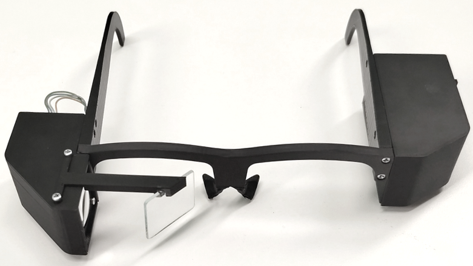
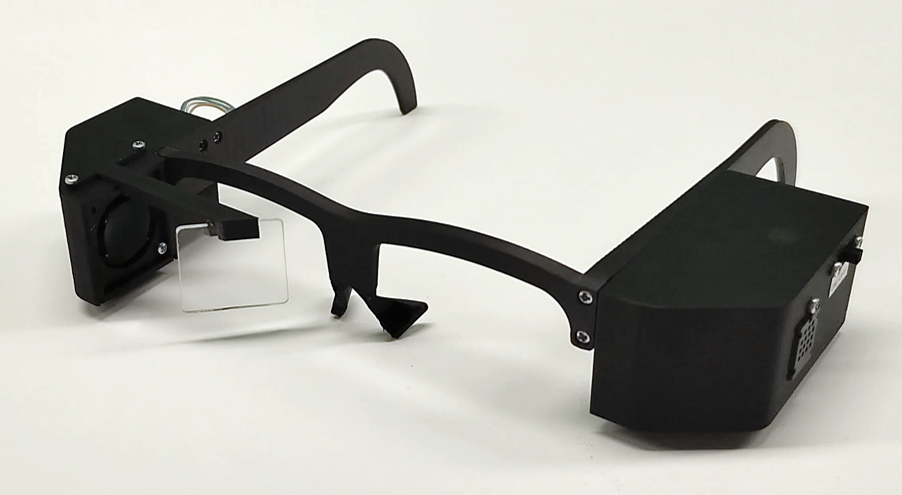
Models M and G share the same design to perform two very different tasks. With a weight of about 100 g and an average cost of 80 €, putting these headsets together won’t be a hurdle.
OpenAR-M integrates a temperature and humidity sensor. It allows the user to monitor their working surroundings in real time while keeping their hands free.
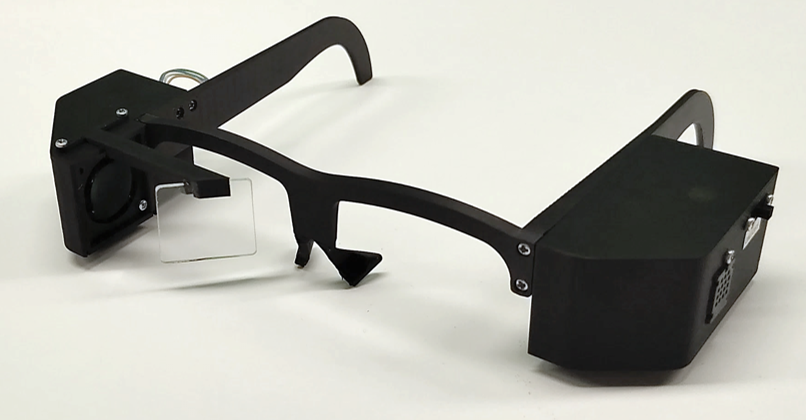
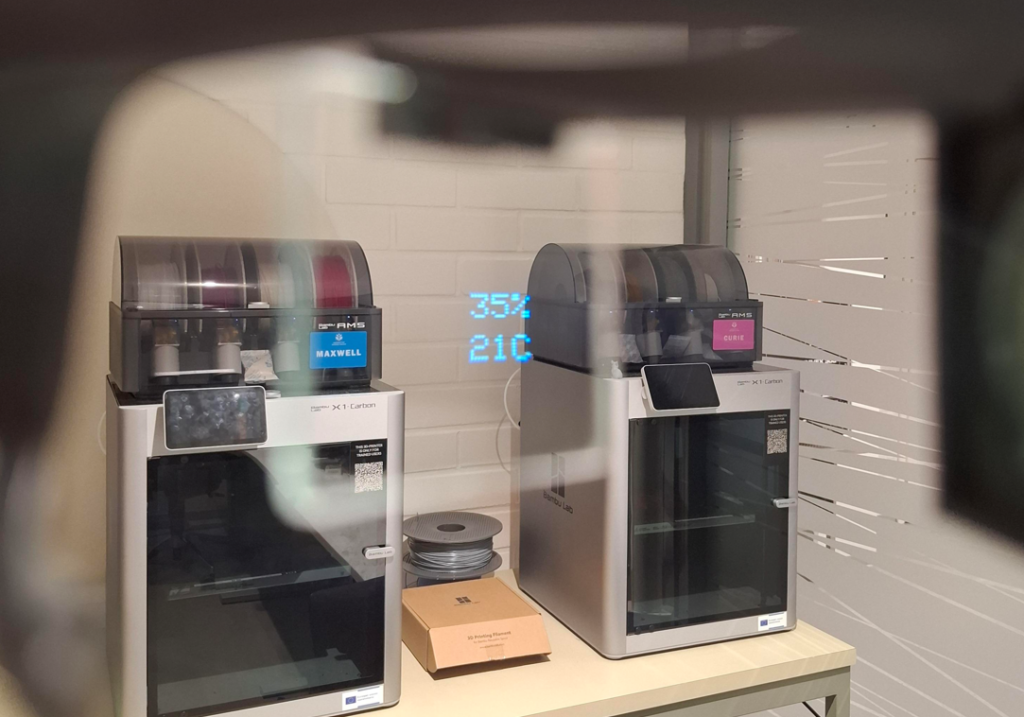
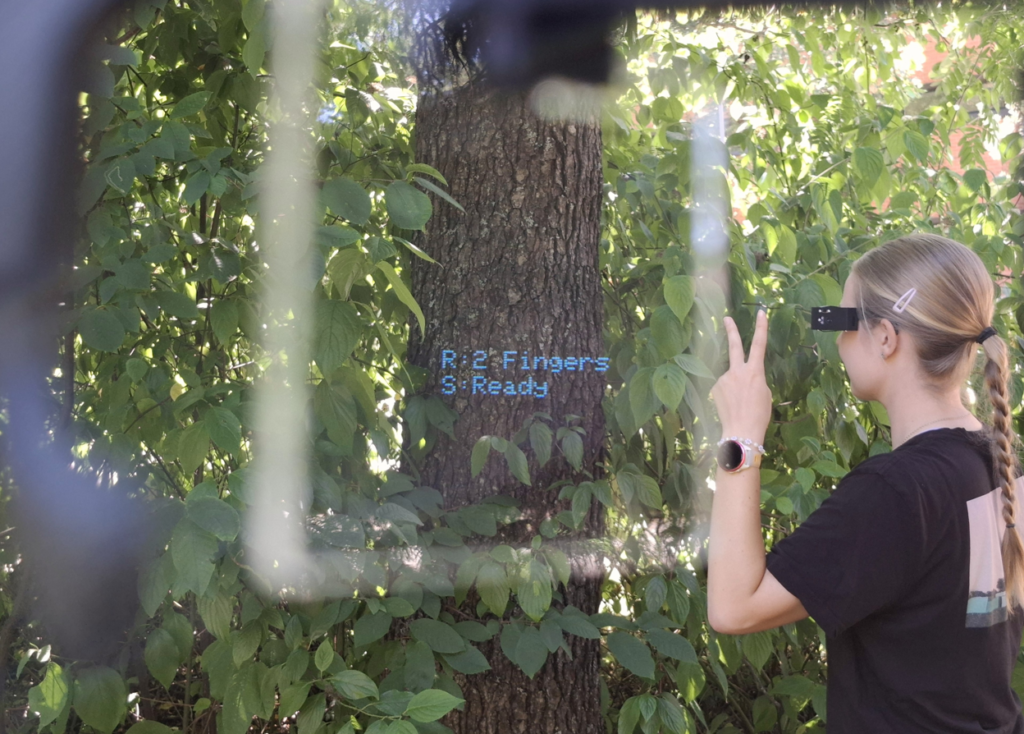
OpenAR-G makes use of an AI gesture recognition module as well as Bluetooth to achieve peer-to-peer communication via gestures: two devices can communicate up to 200 m via simple gestures. Send a thumbs up to your friend on the other side of the building and they will know you are ready to go, whatever it is that the two of you are coordinating…
OpenAR 2.0–2.2
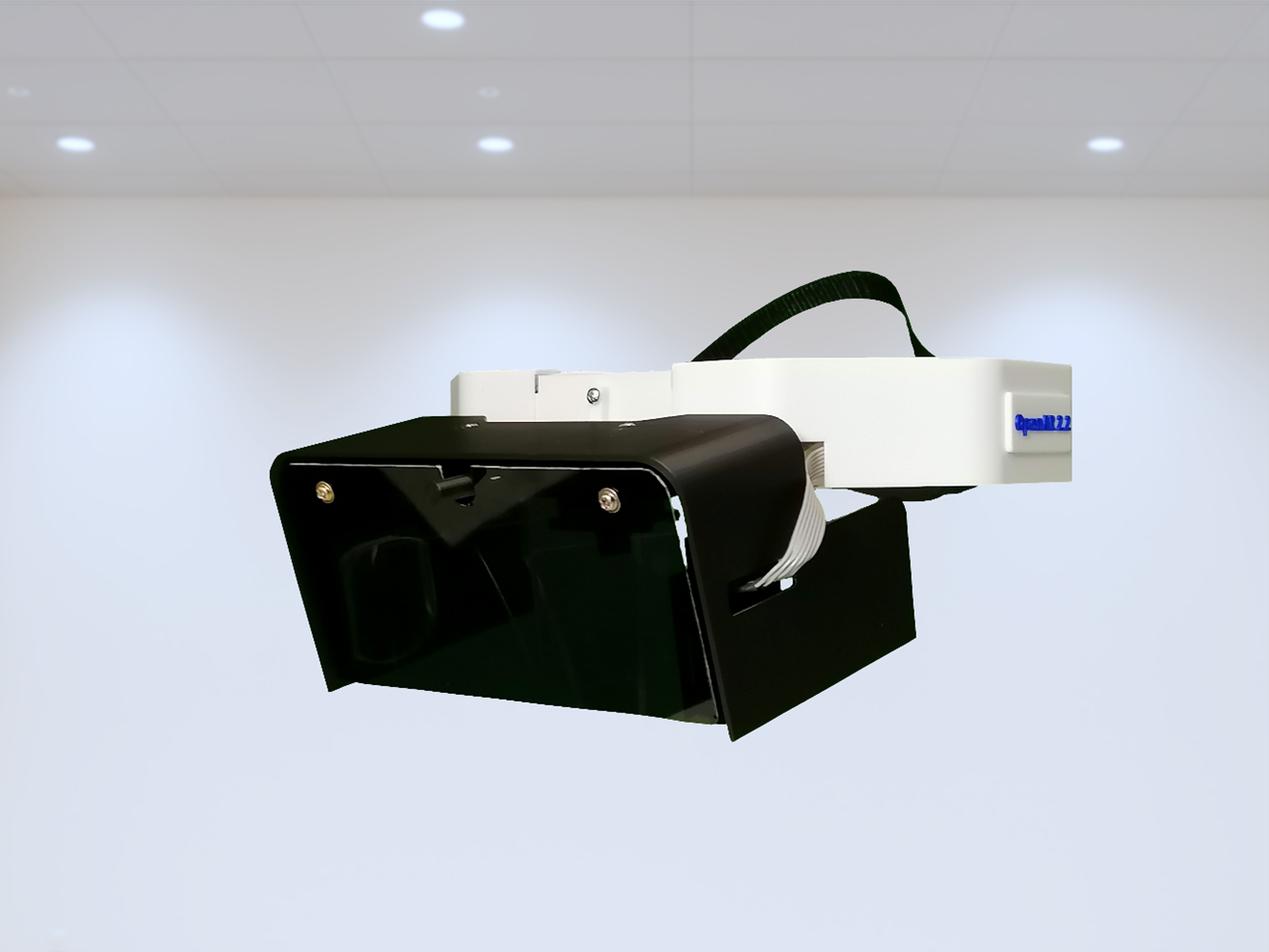
OpenAR 2.0–2.2 is a family of three devices that demonstrate how the same platform can support very different applications. OpenAR 2.0 runs a simple demo program and works as a platform for future iterations.
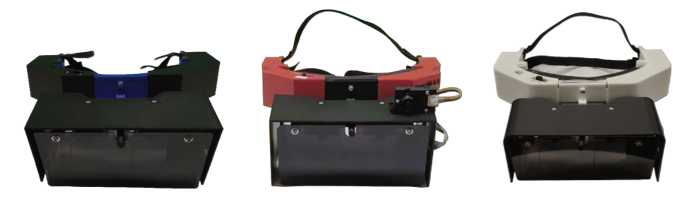
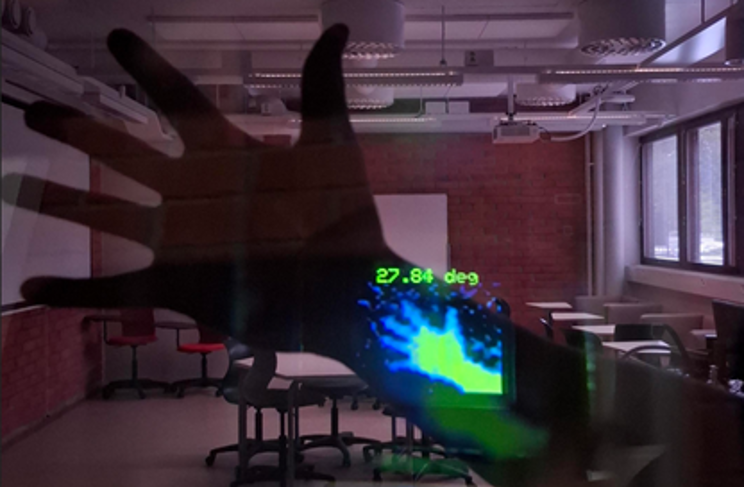
OpenAR 2.1 contains a thermal camera, bringing infrared radiation visible to us mortal beings. Go ahead and inspect any heat leaks around your house before the next winter arrives.
Forget fidget spinners—OpenAR 2.2 runs an app that is a mockup of the classic Flappy Bird game. Of course, as members of Center for Photonics Sciences, we named the game Flying Photon! Your phone acts as a controller and the headset as a display. By tapping the phone screen, you can move the photon up and down as it flies toward incoming obstacles.
OpenAR 1.0
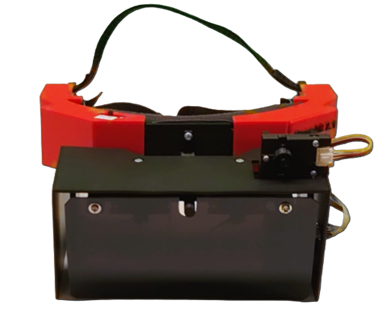
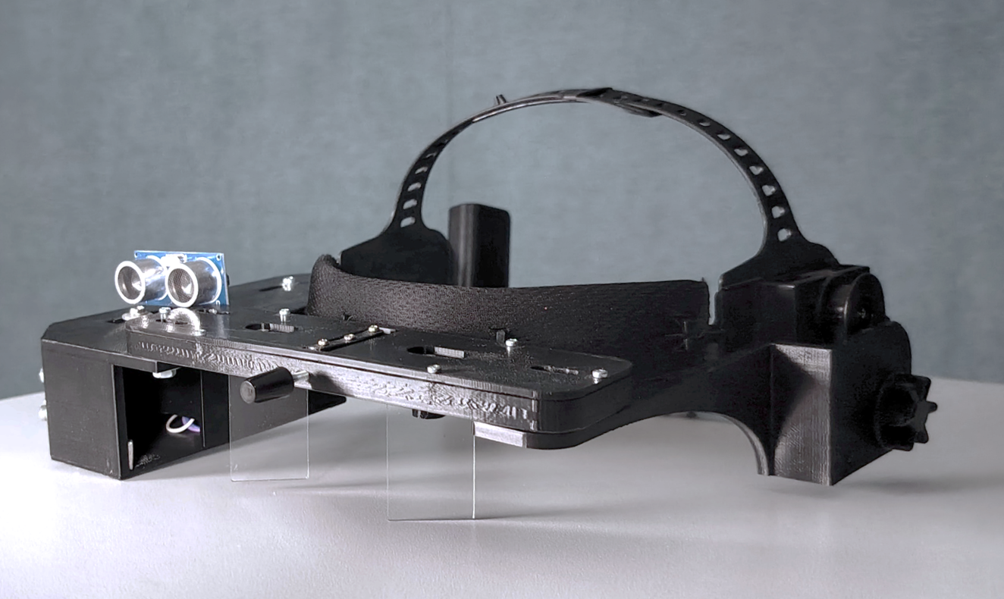
The very first model, OpenAR 1.0, incorporates an ultrasonic distance sensor capable of measuring distances up to a few meters. Want to quickly measure your room for some interior design project? Just take a look through the headset.
History
The story of OpenAR began as a course project in 2019 at the University of Eastern Finland, bringing together optics and electronics in a single device. The result laid the foundation for future OpenAR devices, and OpenAR 1.0 is based on the AR headset built on that course.
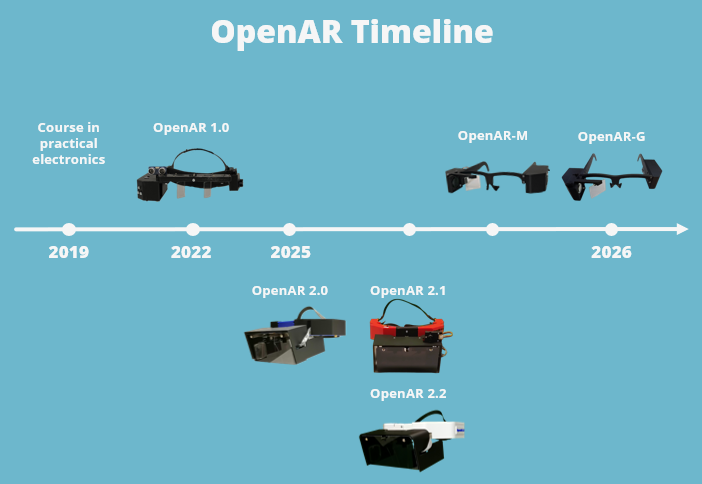
In 2025, OpenAR 2.0 introduced a new optical system based on more accessible optical components, with the lens taken from reading glasses and the mirror cut from a make-up mirror. Building on that platform, OpenAR 2.1 and OpenAR 2.2 were quickly developed to demonstrate the modularity of the design by incorporating different electronic components. With different electronics comes different applications as today there is an abundance of affordable and lightweight sensors, processors, batteries, and the like.
The next generation, OpenAR-M, marked a shift towards a new generation of lighter and more compact monocular OpenAR glasses. While its optical system returned to that of OpenAR 1.0, the overall design incorporated lessons learned from earlier versions to improve comfort and manufacturability. Functionally, the headset makes use of a simple ambient sensor. OpenAR-G, in turn, showcases the use of AI in the form of a gesture sensor and demonstrates how peer-to-peer communication could be realized—things that none of the previous headsets had. While the appearance of OpenAR-G is essentially identical to that of OpenAR-M, the functionality is vastly different, underlining the flexibility of the OpenAR-M platform.
Model pages
Each model has its designated page where you can find not only more information but the full documentation, the 3D model files, and the code. They are all licensed under CC BY-NC 4.0 and Apache-2.0, meaning you are free to copy and redistribute the material as well as remix, transform, and build upon the material for noncommercial purposes.